Essential Basketry Supplies and Tools for Beginners: Building Your Foundation Kit
Starting your basketry journey requires careful selection of basketry supplies and tools for beginners that will serve you well through countless projects. Unlike many modern crafts that rely on synthetic materials, traditional basketry connects you to centuries-old techniques using natural fibers and time-tested tools. Your first workshop experience depends heavily on having quality materials that respond predictably to your hands, allowing you to focus on learning fundamental weaving patterns rather than fighting inferior supplies. The investment in proper basketry materials pays dividends in both immediate success and long-term skill development, as quality tools teach proper technique while inferior ones can actually hinder your progress.
Professional basketry instructors consistently emphasize that beginners benefit most from starting with a curated selection of versatile supplies rather than overwhelming themselves with every available option. Your initial toolkit should include high-quality reed in multiple sizes, essential cutting and shaping tools, reliable measuring implements, and basic finishing supplies. This foundation allows you to complete most beginner projects while gradually expanding your collection based on specific interests and advanced techniques. The key lies in choosing supplies that offer forgiveness for beginners while maintaining the integrity needed for beautiful, functional baskets that will last for generations.
Reed Selection: The Foundation of Quality Basketry Supplies for Beginners
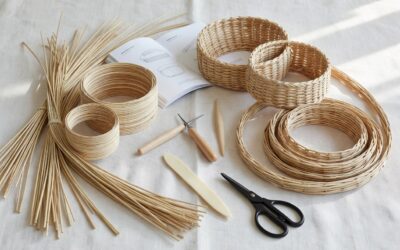
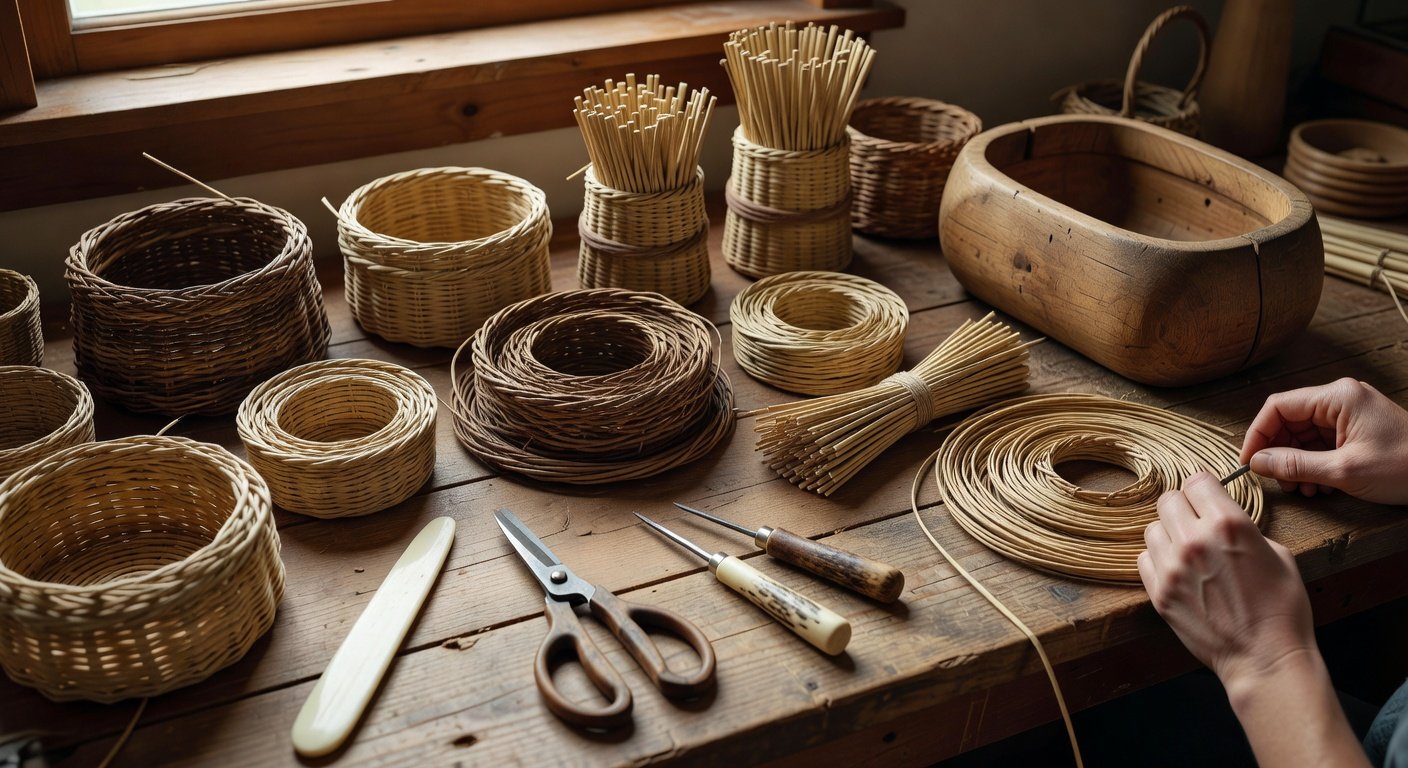
Reed serves as the backbone of most basketry projects, making it the most critical component in your basketry supplies and tools for beginners collection. Flat reed, available in various widths from 1/4 inch to 1 inch, provides the primary weaving material for traditional basket construction. Beginners should start with 1/2-inch flat reed for most projects, as this width offers excellent handling characteristics while remaining forgiving enough for learning basic over-under weaving patterns. Round reed, typically measured by diameter rather than width, creates the structural framework for many basket styles and comes in sizes ranging from #2 (approximately 1/8 inch) to #12 (nearly 1/2 inch diameter). Quality reed should feel smooth to the touch, bend without cracking, and maintain consistent thickness throughout each strand.
When selecting reed suppliers, prioritize those offering pre-cut lengths appropriate for beginner projects rather than bulk coils that require additional preparation. Smoked reed provides an attractive natural variation in color, while bleached reed offers a clean, uniform appearance perfect for painted or dyed finishes. Always purchase reed from reputable suppliers who properly cure and store their materials, as poorly processed reed can crack, split, or develop mold during storage. Many folk schools and basketry instructors recommend starting with a mixed pack containing multiple widths of flat reed and several sizes of round reed, providing the versatility needed for various project types while keeping initial costs manageable.
Understanding Reed Grades and Quality Indicators
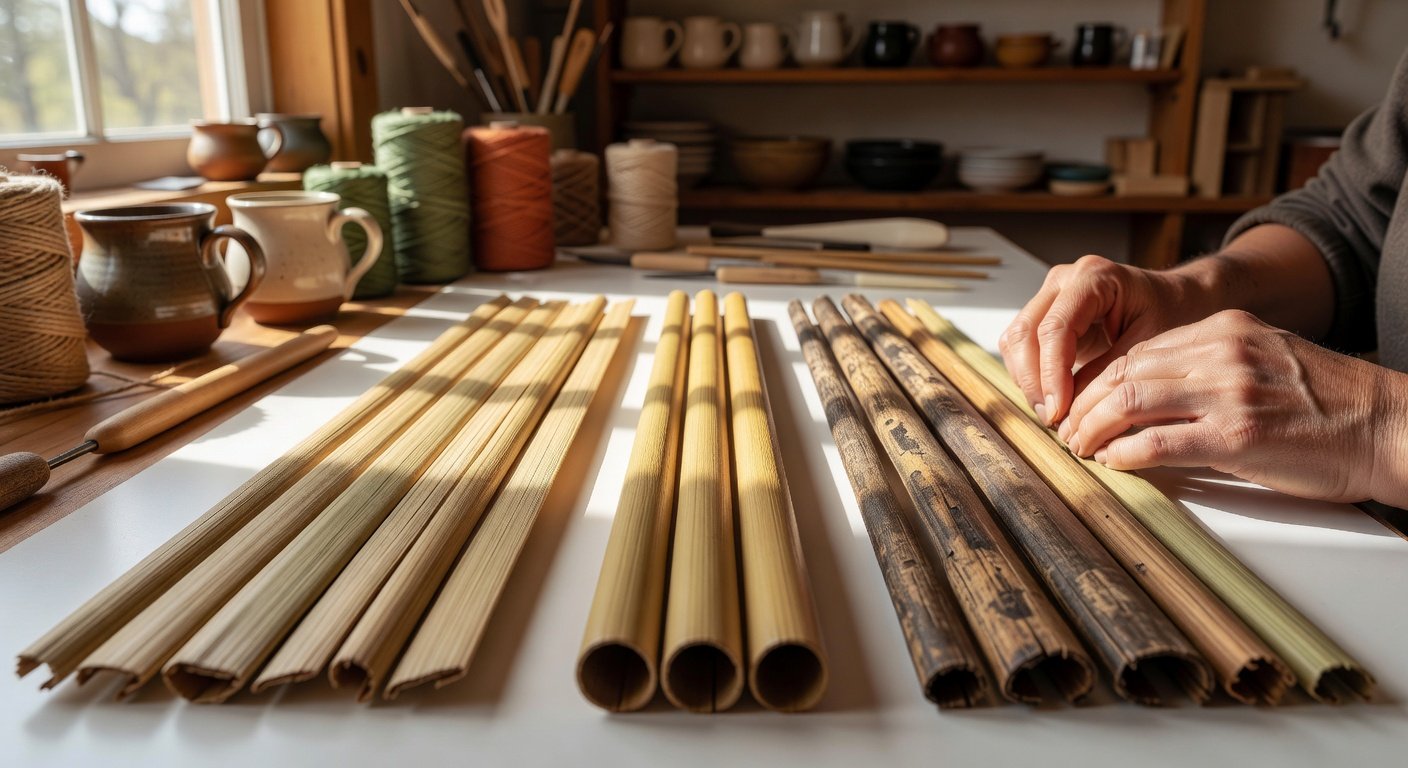
Premium basketry reed exhibits specific characteristics that distinguish it from lower-grade materials commonly found in general craft stores. High-quality reed displays consistent color throughout each piece, smooth surfaces free from rough spots or splinters, and flexibility that allows tight bends without breaking. The grain should run straight along the length of each piece, and the edges should be cleanly cut rather than rough or frayed. When soaked in warm water, quality reed becomes pliable within 10-15 minutes and maintains its strength throughout the weaving process. Inferior reed often shows color variations within single pieces, rough textures that can cause splinters, and brittleness that leads to breakage during manipulation. Investing in quality reed from specialized basketry suppliers rather than general craft retailers ensures consistent results and reduces frustration during your learning process.
Essential Cutting and Shaping Tools for Basketry Success
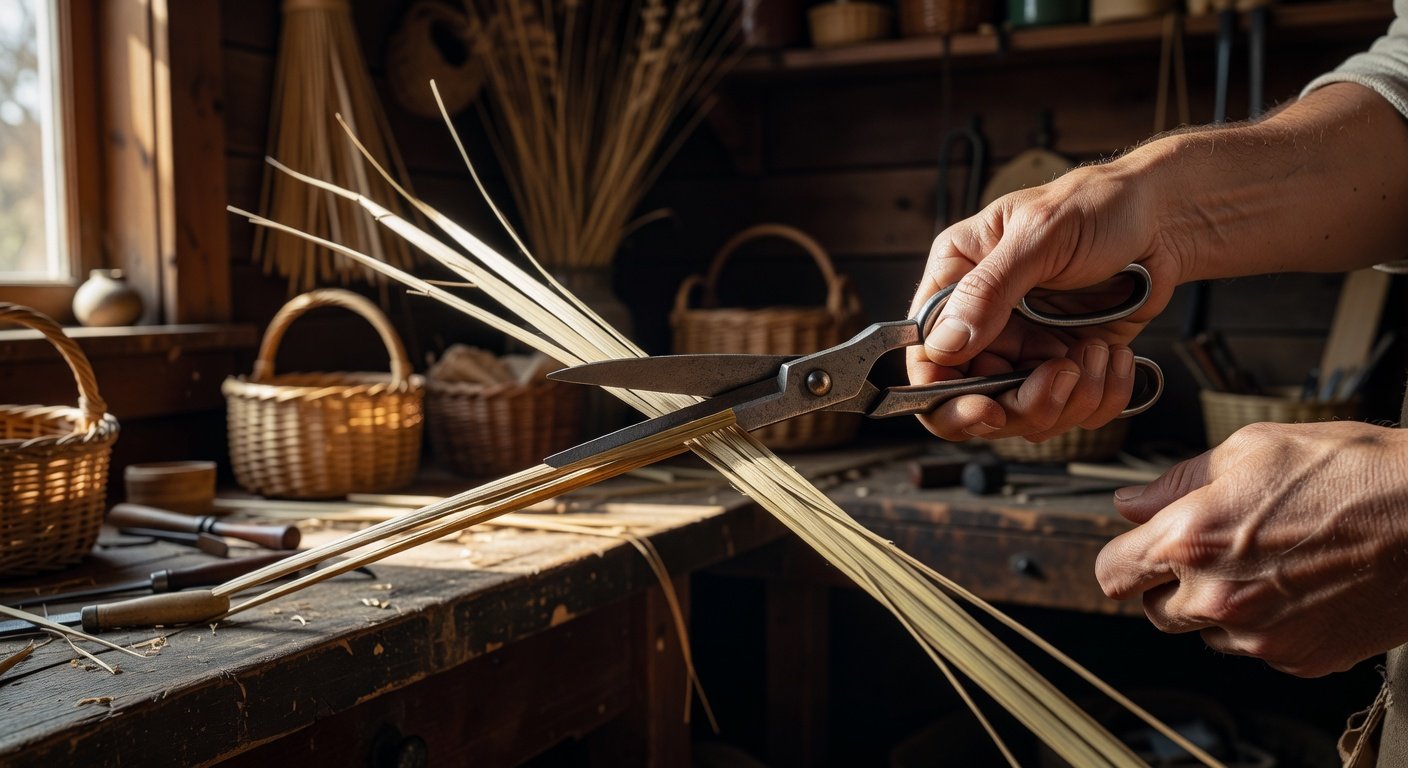
Sharp, reliable cutting tools form the cornerstone of effective basketry supplies and tools for beginners, as clean cuts ensure proper fit and professional-looking results. A quality pair of basketry shears, specifically designed for cutting reed and other natural fibers, should top your tool list. These specialized scissors feature short, sturdy blades that provide excellent control when trimming reed ends close to the basket body. Unlike household scissors, basketry shears maintain their sharpness when cutting tough natural materials and offer the precision needed for detailed finishing work. A sharp craft knife or utility knife serves as your secondary cutting tool, perfect for scoring reed before bending or making precise cuts in tight spaces where scissors cannot reach.
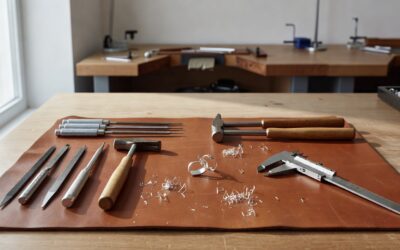
Reed pullers, though often overlooked by beginners, prove invaluable for adjusting weaving tension and repositioning strands without damage. These simple tools feature a curved end that slides under woven reed, allowing you to gently lift and adjust placement without disturbing surrounding work. Bone folders, borrowed from bookbinding traditions, create sharp creases in reed for precise corner formation and help establish clean lines in geometric patterns. A quality awl serves multiple purposes in basketry work, from creating holes for lashing to separating tightly woven areas for threading new materials. Choose an awl with a comfortable handle and a smooth, tapered point that won’t catch on reed fibers during use.
Specialized Basketry Tools Worth the Investment
Professional basketmakers rely on several specialized tools that significantly improve both efficiency and results, making them worthwhile additions to your basketry supplies and tools for beginners collection. A basketry needle, longer and stronger than typical sewing needles, facilitates threading techniques and detailed finishing work that would be impossible with standard tools. Packing tools, available in various widths, help compress woven areas for tight, professional-looking construction while maintaining consistent spacing between elements. A good spoke weight or basket weight holds your work steady during construction, preventing shifting that can throw off symmetry and spacing. These weights typically feature a heavy base with adjustable arms that grip the basket rim without marking the reed.
Basket Molds and Forms: Shaping Your Success
Basket molds provide crucial support during construction, helping beginners achieve consistent shapes while learning fundamental weaving techniques. Traditional wooden molds, carved from hardwoods like maple or cherry, offer the most authentic experience and can last for generations with proper care. These molds typically feature slightly tapered sides that allow easy removal of completed baskets and smooth surfaces that won’t snag delicate reed work. Plastic molds, while less traditional, provide excellent value for beginners and resist moisture damage that can affect wooden forms. Many plastic molds feature measurement marks that help maintain consistent spacing and proportions throughout construction.
The size and shape of your first mold should align with your intended projects and skill level. Round molds work well for traditional gathering baskets and provide forgiving construction that hides minor irregularities common in beginner work. Rectangular molds create more challenging projects but produce highly functional storage baskets perfect for home organization. Oval molds offer a compromise between the two, providing gentle curves that add visual interest while remaining manageable for new basketmakers. When selecting molds for your basketry supplies and tools for beginners kit, consider purchasing two complementary shapes rather than multiple sizes of the same form, as this approach provides greater project variety while keeping costs reasonable.
Mold Maintenance and Storage Considerations
Proper care of basket molds extends their useful life and ensures consistent results across multiple projects. Wooden molds require occasional treatment with food-safe mineral oil to prevent cracking and maintain smooth surfaces that won’t damage delicate reed work. After each use, clean molds thoroughly with a damp cloth and allow complete drying before storage to prevent mold or mildew development. Store molds in a dry location away from extreme temperature changes that can cause warping or cracking. Plastic molds need less maintenance but benefit from periodic cleaning with mild soap and water to remove any residue that might transfer to your basketry materials.
Measuring and Layout Tools for Precision Work
Accurate measurement forms the foundation of successful basketry, making quality measuring tools essential components of your basketry supplies and tools for beginners collection. A flexible measuring tape, preferably marked in both inches and centimeters, allows you to measure curved surfaces and irregular shapes that rigid rulers cannot accommodate. Choose a tape measure with clear, easy-to-read markings that won’t wear off with frequent use. A quality ruler or straightedge, at least 18 inches long, helps with layout work and ensures straight cuts when preparing reed materials. Metal rulers provide the most durability and accuracy, while wooden rulers offer a more traditional feel that complements natural basketry materials.
Dividers or compass tools help establish consistent spacing for spokes and ribs, crucial elements in many basket construction methods. These tools allow you to step off equal measurements around curved surfaces, ensuring symmetrical construction that would be difficult to achieve through estimation alone. A pencil or marking tool designed for temporary marks on natural materials helps with layout work without leaving permanent stains or damage. Water-soluble markers work well for this purpose, as they disappear completely when the reed is soaked during construction. Avoid permanent markers or ink pens that can bleed through reed fibers and create unsightly stains on finished baskets.
Soaking and Preparation Equipment
Proper reed preparation requires adequate soaking facilities that accommodate the materials in your basketry supplies and tools for beginners toolkit. A large, shallow pan or basin allows reed to soak flat without kinking or developing permanent bends that can weaken the material. Plastic storage containers work well for this purpose, as they resist staining and provide easy cleanup after use. The container should be large enough to accommodate your longest reed pieces while remaining shallow enough for easy access during construction. Warm water accelerates the soaking process, so choose containers that can safely hold heated water without warping or releasing harmful chemicals.
Towels designated specifically for basketry work help manage moisture during construction and protect work surfaces from water damage. Terry cloth towels provide excellent absorption while remaining gentle on delicate reed surfaces. Keep several towels on hand, as basketry work can be messy and you’ll need clean, dry towels throughout the construction process. A spray bottle filled with clean water allows you to refresh reed moisture during long construction sessions without completely re-soaking materials. This targeted approach maintains workability while preventing over-saturation that can weaken reed fibers or cause dimensional changes in completed work.
Finishing Supplies and Protective Materials
Quality finishing supplies transform functional baskets into beautiful, long-lasting pieces worthy of display and daily use. Natural finishing oils, such as tung oil or linseed oil, penetrate reed fibers to provide protection against moisture and wear while enhancing the natural color and grain of the material. These oils require careful application with lint-free cloths and adequate drying time between coats, but they create durable finishes that can be renewed as needed throughout the basket’s lifetime. Water-based polyurethane finishes offer faster drying times and easier cleanup, making them popular choices for beginners who want reliable results without extensive finishing experience.
Protective equipment should be included in every basketry supplies and tools for beginners collection to ensure safe and comfortable working conditions. Cut-resistant gloves protect hands during heavy cutting operations while maintaining enough dexterity for detailed work. Safety glasses prevent eye injuries from flying reed fragments during cutting and shaping operations. A dust mask becomes important when sanding or applying finishes, as even natural materials can create respiratory irritation in enclosed spaces. An apron or old clothing protects your regular clothes from water, oil stains, and reed fragments that are inevitable parts of the basketry process. These safety considerations become particularly important during intensive workshop sessions where you’ll be working for extended periods.
Storage Solutions for Long-term Material Care
Proper storage extends the life of your basketry supplies and tools for beginners while maintaining material quality for future projects. Reed should be stored in a cool, dry location away from direct sunlight that can cause brittleness and color fading. Flat storage in wide drawers or under-bed storage boxes prevents kinking and maintains straight grain lines essential for quality work. Tools require clean, dry storage with adequate protection for cutting edges and delicate points. A dedicated tool roll or case keeps everything organized while providing easy transport to workshops and classes. Regular maintenance of stored materials, including periodic inspection for signs of pest damage or moisture problems, ensures your investment remains protected and ready for use.
Frequently Asked Questions
What size reed should beginners start with for their first basketry project?
Begin with 1/2-inch flat reed for your primary weaving material, as it offers excellent handling characteristics while remaining forgiving for learning basic techniques. Combine this with #3 and #6 round reed for structural elements. This combination provides versatility for most beginner projects while maintaining manageable working properties.
How much should I expect to spend on basic basketry supplies and tools for beginners?
A complete starter kit including quality reed, essential tools, and a basic mold typically costs $75-150. This investment covers materials for several projects while providing tools that will serve you throughout your basketry journey. Starting with quality supplies actually saves money by preventing frustration and failed projects.
Do I need to buy basketry-specific tools or can I use household items?
While some household tools can work temporarily, basketry-specific tools significantly improve results and reduce frustration. Basketry shears, awls, and needles are designed for natural fiber work and maintain sharpness longer than general craft tools. The precision and durability justify the investment for serious learning.
How long does reed need to soak before it becomes workable?
Most reed becomes pliable after 10-15 minutes in warm water, though thicker pieces may require longer soaking. The reed should bend easily without cracking when ready. Over-soaking can weaken fibers, so test flexibility periodically rather than leaving materials submerged for extended periods.
Where can I find quality basketry supplies and tools for beginners?
Specialized basketry suppliers offer the highest quality materials, though many items are available through craft retailers and online marketplaces. Look for suppliers who cater to traditional basketmakers rather than general craft stores. Many folk schools also sell quality supplies to their students at competitive prices.
Ready to Start Your Basketry Journey?
Transform your creative vision into beautiful, functional baskets with the right supplies and expert guidance. Browse our comprehensive directory of basketry workshops and folk schools where master craftspeople share traditional techniques in supportive, hands-on environments. Whether you’re drawn to Appalachian egg baskets or Shaker utility designs, the perfect learning experience awaits. Contact us today to discover basketry classes near you and begin building skills that connect you to centuries of American craft tradition.